Where Faith Becomes Personal
Inside Marilyn Williams’ Gospel Worldview Class
“The Latin word from which we get vocation is vocātiō, which means ‘calling,’” explains Reverend Dr. Marilyn Williams. “In Christian vernacular, vocation refers to God’s call on someone’s life to something that person is particularly gifted in or drawn to.”
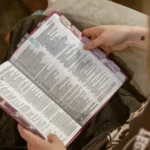
Being a Christ-centered university isn’t simply about opening the Bible in class, attending chapel or singing worship songs together—though those moments matter deeply and plant seeds that reach into eternity. What truly sets a Christ-centered education apart is what happens when faith becomes personal: when students are known, challenged and invited into genuine relationship with God and one another as they discover their calling. In Williams’ Gospel Worldview class at Jessup University, that transformation is not theoretical— it is happening in real time.
According to Williams, “learning becomes more than study or memorization. Learning becomes an act of worship, obedience and submission to God’s purpose for students’ lives.”
Each semester, Williams watches students arrive with vastly different stories. Some grew up in Christian homes but have never owned their faith for themselves. Others step into her classroom with little to no exposure to the biblical narrative at all. It is not uncommon for students in Williams’ class to make the decision to follow Jesus, sometimes for the first time and sometimes as a recommitment after years of distance.
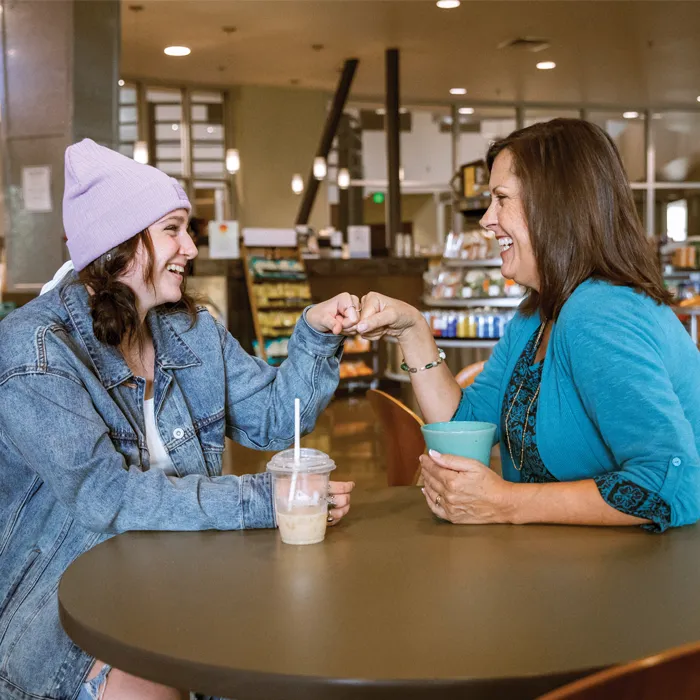
“It is typical that one to three students make the decision to start following Jesus by the middle to end of the Gospel Worldview class,” Williams says.
The most recent semester of Fall 2025 resulted in five students making the decision to give their lives to the LORD and 10 students who re-dedicated their lives to following Jesus, some of whom were her most reluctant students at the beginning of the semester.
Williams’ course may be mandatory for incoming students, but those moments don’t come from obligation. Rather, they emerge through careful teaching, trust and a curriculum Jessup has intentionally designed to ground students in the Word. The Gospel Worldview course walks students through Scripture in six “Acts”: Creation, Conflict, Covenant, Christ, Church and Consummation. By the time students reach Act Four—Christ—many find themselves confronting the story not just intellectually, but personally.
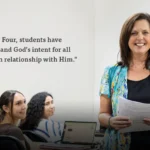
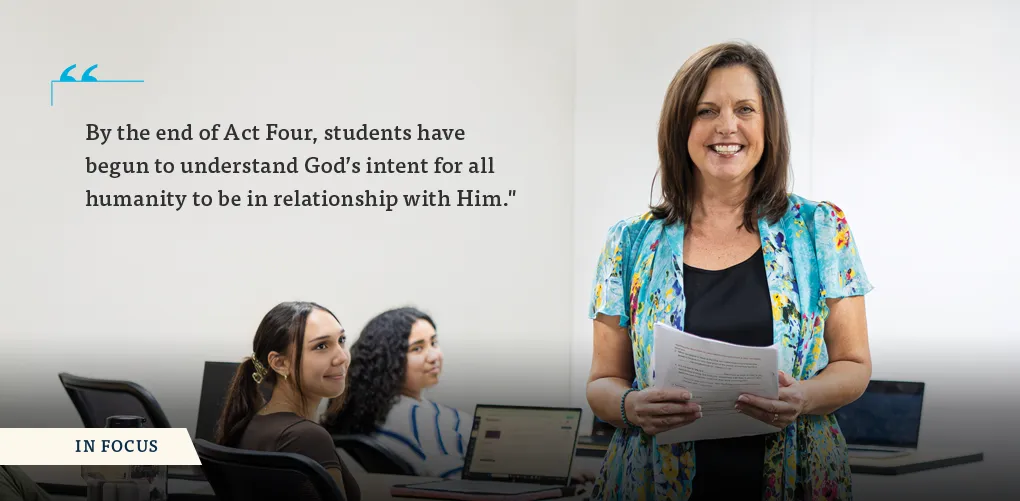
“By the end of Act Four, students have begun to understand God’s intent for all humanity to be in relationship with Him,” Williams explains. “Understanding these truths informs students to make a personal choice in responding by faith in God’s promises and restoration through Jesus.”
The connection between curriculum and culture at Jessup fosters an environment for students to receive God’s calling for their life. Williams says, “combined with a rich, Gospel-centered curriculum Dr. David Timms and Dr. Mark Moore have provided Jessup for the Gospel Worldview classes, students experience God in profound and new ways.” The transformation unfolding in her classroom is inseparable from the environment Jessup has created—one where faith and academic rigor are not at odds, but deeply integrated.
That integration reflects Williams’ own journey. “I never pursued vocational ministry,” she says. “But God pursued me.” She further explains, “I am not an evangelist. However, my top spiritual gift is teaching.”
For years, her ministry looked like faithful presence—serving her church, loving her neighborhood and practicing quiet obedience. It wasn’t until friends encouraged her to write down her family’s Advent practices that her vocational calling began to take shape. That small act of obedience led to a published devotional, titled Advent Family Devotions, which opened doors to speaking engagements, retreats and eventually international ministry across the United States, the Middle East, the United Kingdom, Japan, South Korea and the Ivory Coast.
“I could tell you so many stories of God getting ahold of uninterested students who start out resenting required courses then begin engaging their coursework with purpose and passion.”
Those years of ministry experience now shape every aspect of her classroom. “By serving in director and pastoral roles, as well as internationally, I can teach from life experience as well as from theory,” Williams says. “I deeply believe the best professors are those who have practiced what they are teaching.”
Students feel that difference. Her classes are marked not only by theological depth, but by mentorship that extends far beyond lectures and office hours. “Transformative leadership requires authenticity, inspiration, empathy and innovation,” she says. “I get a front-row seat to the work of the Holy Spirit changing students from the inside out.”
That transformation is visible in students like Natalie Sexauer, who Williams watched move from casual engagement to deep conviction as God clarified her calling to missionary work. Natalie graduated early and is heading to the mission field as a living example of how a classroom can become a launching pad for God’s purposes in the world.
“I could tell you so many stories of God getting ahold of uninterested students who start out resenting required courses then begin engaging their coursework with purpose and passion,” Williams says. “Once they start experiencing God’s heart and purpose for their lives, casual students come alive in front of my eyes! This is Jessup’s legacy: God at work in the hearts and lives of students, calling and equipping them for eternal purpose.”
Whether a student is discovering a relationship with Jesus for the first time or carrying a lifelong faith into service around the globe, learning to see the world through a biblical lens shapes both heart and action. This way of seeing becomes an internal transformation that naturally overflows into outward expressions of God’s love and calling. Jessup faculty, staff, donors and partners have the privilege of equipping students, not only to change the world around them, but to set their hearts upon the plans that God has for them.